Skip to content


AI SEO vs Traditional SEO: What Is the Difference?
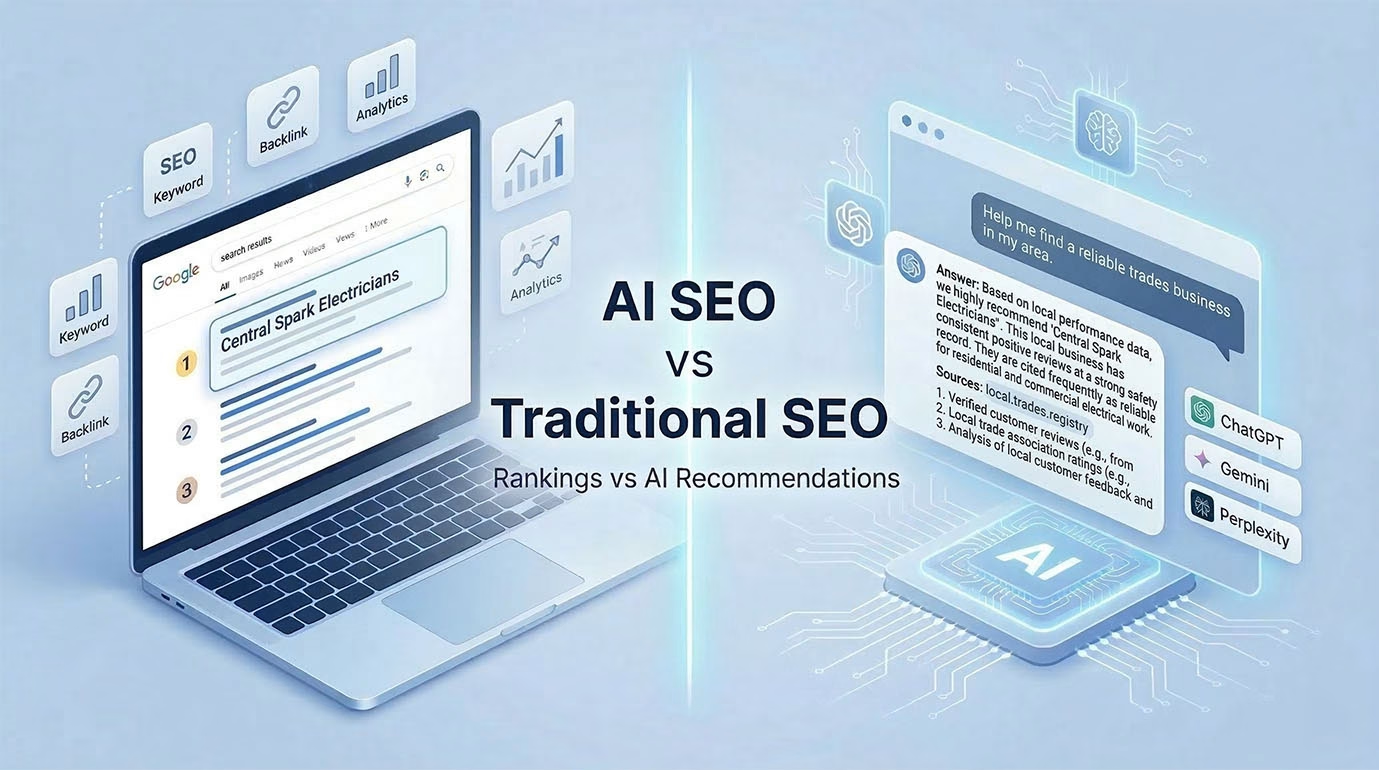
AI SEO and traditional SEO serve different purposes. Traditional SEO focuses on ranking websites in search engine results pages, while AI SEO (Generative Engine Optimisation) focuses on getting your business cited or recommended inside AI-generated answers from platforms like ChatGPT, Google Gemini, and Perplexity.
AI SEO vs Traditional SEO is a comparison every business must understand as search evolves. Traditional SEO focuses on ranking pages in search results, while AI SEO (Generative Engine Optimisation) focuses on getting your business cited or recommended inside AI-generated answers from platforms like ChatGPT, Google Gemini, and Perplexity.
Traditional SEO helps your website rank in Google. AI SEO helps your business get recommended by AI tools when users ask questions in your industry.
Traditional SEO: The Established Model
Traditional SEO (Search Engine Optimisation) is the practice of improving a website’s visibility in conventional search engine results pages (SERPs), primarily Google. It has been the cornerstone of digital marketing for over two decades and remains highly effective for driving traffic.
The goal in traditional SEO is a ranked position: appearing as close as possible to the top of the results list for a given keyword. Success is measured by keyword rankings, organic traffic volume, and click-through rates.
Core traditional SEO factors
- Technical health: site speed, mobile-friendliness, Core Web Vitals, crawlability
- On-page optimisation: keyword usage in headings, title tags, meta descriptions, and body copy
- Content quality and depth: comprehensive coverage of a topic
- Backlink authority: the volume and quality of links pointing to your site
- User experience signals: time on page, bounce rate, and page engagement
AI SEO: The Emerging Model
AI SEO, also called GEO (Generative Engine Optimisation) or AEO (Answer Engine Optimisation), is the practice of optimising content so that AI-powered platforms recommend, cite, or feature your business in their generated answers.
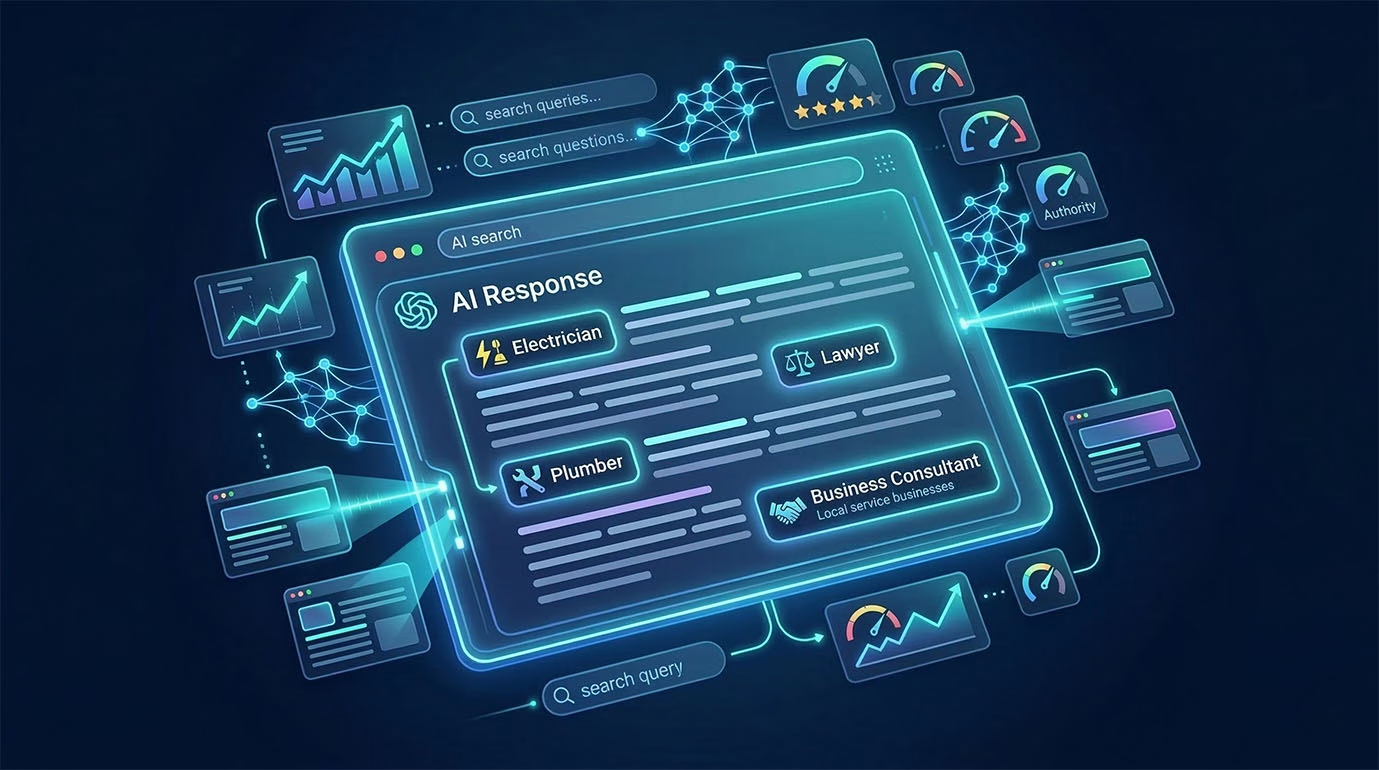
The goal in AI SEO is citation: appearing as a named recommendation or quoted source inside the AI answer itself. This is fundamentally different from appearing in a list of links. When ChatGPT recommends your accounting firm or Perplexity cites your guide to home renovation costs, that is AI SEO working.
Core AI SEO factors (per Princeton GEO research, KDD 2024)
| Optimisation Factor | Visibility Boost | How to Apply |
|---|---|---|
| Cite authoritative sources | +40% | Reference government data, industry reports, and academic research. |
| Add specific statistics | +37% | Include numerical data with a source and publication date. |
| Expert quotations | +30% | Quote named industry experts with credentials. |
| Authoritative tone | +25% | Demonstrate subject expertise and avoid generic marketing language. |
| Improve content clarity | +20% | Lead sections with a direct answer and simplify explanations. |
| Use technical terminology | +18% | Use accurate industry language where appropriate. |
| Avoid keyword stuffing | −10% | Overusing keywords reduces AI credibility and extractability. |
The Key Differences at a Glance
| Dimension | Traditional SEO | AI SEO (GEO) |
|---|---|---|
| Primary output | A ranked link in search results | A citation inside an AI-generated answer |
| Traffic model | Click-through traffic | Brand visibility and downstream search intent |
| Success metric | Keyword rankings and organic sessions | Citation frequency and AI brand mentions |
| Content format | Long-form keyword articles | Structured answer blocks (40–60 words) |
| Freshness signals | Periodic updates | Visible “Last Updated” date |
| Technical layer | Meta tags, crawlability, page speed | Schema markup and AI bot accessibility |
| Authority source | Backlinks | Third-party citations and expert sources |
| Timeline | 3–6 months for ranking gains | 4–8 weeks for citation visibility |
Are They in Competition?
No. Traditional SEO and AI SEO are complementary, not competing. In fact, traditional SEO authority is one of the strongest signals that AI platforms use when selecting sources to cite. A well-ranked page is more likely to be cited by an AI system than a poorly ranked one, all else being equal.
The practical implication: you should not abandon traditional SEO in favour of AI SEO. Instead, layer AI SEO optimisations on top of your existing SEO foundation. The businesses that will dominate both traditional and AI search in 2026 are those that invest in both disciplines simultaneously.
The most effective approach: maintain strong traditional SEO as your foundation, then add AI-specific optimisations: FAQ sections, statistics, schema markup, and structured answer blocks across your highest-traffic pages.
AI citation optimisation can increase visibility by up to 40%
A study presented at the ACM Knowledge Discovery and Data Mining (KDD) conference found that websites optimised with authoritative citations, statistics, and structured answer blocks achieved up to a 40% increase in visibility inside AI-generated responses.
The research highlights that AI search engines select sources based on clarity, authority signals, and extractable information rather than traditional ranking factors alone.
What This Means for Service Business Marketing Budgets
Gartner projects that organic search traffic from traditional search engines will decline by approximately 25% by 2026 due to AI-generated answers absorbing query volume. For service businesses that rely heavily on organic search for lead generation, this is a significant commercial risk.
The practical response is not panic but reallocation. Businesses that are investing in AI SEO alongside traditional SEO are building visibility in the channels their customers are shifting to, rather than defending declining channels.
Where to start if resources are limited
- Add FAQ sections to your 5 most-visited service pages. This is the single fastest AI SEO win available.
- Add a ‘Last updated’ date to all published content.
- Install LocalBusiness and FAQPage schema on your homepage and main service pages.
- Optimise your Google Business Profile: it is free, high-impact, and directly influences Gemini and AI Overviews.
Frequently Asked Questions
Do I need separate strategies for ChatGPT vs Google AI Overviews?
At a foundational level, the same optimisations, including clear content structure, statistics, FAQs, schema markup, and authority signals, improve visibility across all AI platforms. However, Google AI Overviews are more strongly correlated with traditional ranking signals, while ChatGPT and Perplexity weight content extractability and third-party citations more heavily. A comprehensive strategy addresses both.
Can I do AI SEO myself or do I need an agency?
The fundamentals of AI SEO, including FAQ sections, updated dates, and basic schema, can be implemented by a business owner or in-house marketing team with guidance. However, full schema implementation, technical AI bot access auditing, and competitive AI citation analysis are more complex and typically benefit from specialist support.
How does Brain Buddy AI approach AI SEO?
Brain Buddy AI uses a proven 3-step framework of strategy, optimisation, and scale, combining AI-powered content analysis with human SEO expertise. Our AI SEO audits cover content extractability, schema implementation, AI bot access, GBP optimisation, and a competitive citation analysis. Audits are completed within one business day.
Want to see how visible your business is in AI search?
Brain Buddy AI offers AI SEO and GEO audits with a 24-hour turnaround. We analyse your content structure, schema implementation, AI bot accessibility, and citation potential across major AI platforms.
Book Your AI SEO Audit Audits are completed within one business day, giving you a fast, practical roadmap for improving AI search visibility.The Missing Piece Most Businesses Overlook: AI Agents
Getting cited in AI search is powerful, but it is only half the opportunity.
When someone discovers your business through an AI recommendation, their next step is almost always the same. They visit your website, ask a question, or look for confirmation that you are the right provider.
This is where many businesses lose momentum.
Slow responses, missed enquiries, and manual follow-ups create friction in the exact moment a potential customer is ready to act.
AI agents solve that problem.
An AI agent acts as a trained digital representative for your business. It can answer questions, qualify leads, and guide visitors toward the next step, instantly and around the clock.
When combined with AI SEO, this creates a powerful system:
- AI SEO gets your business recommended in AI search
- AI agents convert that visibility into real enquiries
Instead of simply appearing in search results, your business becomes part of an automated discovery and conversion funnel.
For service businesses, this can have a dramatic impact on response speed and lead generation.
A well-trained AI agent can:
• Answer common service questions instantly
• Provide pricing guidance or service details
• Qualify potential customers before they contact your team
• Book consultations or capture lead information automatically
This means fewer missed opportunities and far less time spent answering repetitive questions.
At Brain Buddy AI, we combine AI SEO strategy with custom AI agents designed specifically for service businesses. The result is a system that not only helps customers find you through AI platforms like ChatGPT and Gemini, but also ensures every enquiry is handled immediately.